Yep, you’ve seen that photo before. Day before yesterday, in fact, as the poster child for “Grime” in my Gallimaufry post. That’s because nothing has changed–the project is incomplete. Yesterday didn’t progress in quite the way I’d envisioned, so all 100+ bottles are still soaking in my husband’s bathtub. Now, because of a full schedule and a tulip-peeping trip, that’s where they’ll sit until Monday. Often, I can hide the fact that my best laid plans got derailed and a project wasn’t completed on schedule. But in this case, the evidence is pretty blatant. On the plus side, my husband never takes a bath (his bathroom has a separate shower stall that he uses instead). A five-day soak is certainly not going to hurt these bottles, and might actually make my impending attack with the scrub brush less arduous. On the down side, I’ve junked up my husband’s bathroom for longer than I intended. Although using the bathtub was his idea, I still feel guilty for invading his space–he’ll return home on Sunday night, tired from travel, and have to start his new week faced by this chaos. I’m sorry, hon, and I promise not to drag home any more scrungy bottles from the antique fair on Monday unless your bathtub has first been restored to its customary vacant condition!
Category Archives: True Life
Appetites
Photo credit Angie Jordan, sister-in-law
When my husband and I lived in Japan, we used to laugh at how the food was “Japanesed” in every non-Japanese restaurant we tried. Chefs doctored Mexican, Indian, and Italian food to include traditional Japanese ingredients and to suit Japanese palates. Not even American fast food chains were exempt from tampering—McDonald’s offered an ebi (shrimp) filet and a “juicy” chicken sandwich made from the fattiest, gnarliest dark meat you’d ever want to see, and Pizza Hut’s menu was a complete shock to an American searching for a taste of home. Who ever heard of putting tuna, mayo, and corn on a pizza…much less squid, seaweed, and fish eggs?
Now that we’re living in a small village in England, eating out has generally been limited to the nearby traditional English pubs where we’ve been sampling what we assume to be traditional English food (meaning loads of delicious, fresh, local ingredients seasoned with a dash of salt and maybe a flake or two of pepper if the chef is really daring). Lately though, our travels have taken us to some larger towns and cities where we’ve encountered a more exotic variety of dining choices, and sure enough, the English corrupt ethnic cuisine as well. In our tourist adventures this weekend, for example, we found ourselves an “authentic” Indian restaurant owned and operated by “authentic” Indians (and not second or third generation UK citizens, judging by their accents) where I could have supplemented any of the “authentic” entrées (i.e. prepared with something approaching the correct amount of spice, which is the equivalent of adding napalm for most Brits) with a side of chips (complete with malt vinegar). We also tried an Italian establishment, where my starter of creamy garlic mushrooms (garlic is also considered heavy artillery in the spice arsenal) was served on top of a Yorkshire pudding. I’m willing to bet I couldn’t walk into a true Thai restaurant in Bangkok and expect to order a sticky toffee pudding for dessert.
Please don’t think that for one second I believe ethnic cuisine in America is unmolested. I knew that Taco Bell was not Mexican food, but until I lived and travelled overseas, I didn’t realize to what extent we’d adapted foreign foods to meet our gastronomic expectations. I’ve been to Hong Kong, where despite their autonomy from the mainland nation, they eat a lot of Chinese food, and they’ve never even heard of General Tso’s chicken. In three years in Japan, I didn’t see a single Japanese steakhouse where a Chinese “chef,” assisted by a Mexican “sous-chef” would toss eggs into his tall white hat, build a flaming volcano of onion rings, or toss grilled shrimp into the open mouths of sixteen strangers seated around a scorching hot griddle-cum-table. However, I think despite its reputation as a cultural melting pot and an abundance of Americanized dining establishments, the US does still offer plenty of opportunities to find authentic ethnic cuisine. Thanks to immigrants who have held fiercely to their native customs and been willing to share their dietary traditions with their adopted homeland, Americans with an adventurous appetite can travel the culinary world without even applying for a passport.
Thus begins the April A to Z Challenge. A big thanks to challenge founder Arlee Bird for inspiring a legion of bloggers to expand their creative horizons, and for fostering a supportive community where they can also receive encouragement and feedback!
Rebellion
Dammit, Winter, you can’t stop us!!!
This British winter, which from a Virginia girl’s perspective I would argue officially began in November 2011, has tried its best to break us. The frigid temperatures, the leaden skies, the incessant precipitation in all its liquid and frozen incarnations, the howling winds–they’ve all conspired to suck every last bit of enthusiasm out of our desire to travel and explore this country. But we have stood firm in our resolution to get out there and do as much as we can before we have to leave England. This weekend is no exception. We are exploring the Lake District, moving as nimbly as we can through towns and along footpaths in our numerous layers of clothing topped by multiple layers of outerwear. In intermittent snow flurries, we conquered Keswick today, roaming the Saturday market, browsing in numerous shops, wandering through the pencil museum, and completing a Top Secret Treasure Trails Spy Mission before embarking on a four-mile circular walk along the Greta River. By day’s end, we had racked up 11 frosty miles on the old pedometer, and had defiantly thumbed our noses at Old Man Winter once more (although I must admit by the end of the afternoon, my sole mission in life had been to return to the B&B for a hot shower, my flannel pjs, and a cup of tea). Rebels that we are, tomorrow we’ll bundle up again and explore the length of Windermere, the longest lake in the District at just over 11 miles, via a four-mile trail and a series of teeth-chattering boat hops between villages.
While we’ve obviously demonstrated that we are not afraid to go and do our thing even when the weather outside is frightful, we are vehemently lobbying for some warm and/or sunny spring weather when we explore Northern Wales over the upcoming Bank Holiday weekend in May!
Beef
Question 73
Would you be willing to go to a slaughterhouse and kill a cow? Do you eat meat?
No, and yes. There. Am I done? Can I go now?
Dr. Gregory Stock makes sure there’s no moral dilemma left untouched in The Book of Questions. I don’t like this question, because I’m not sure what it says about my character.
I knowingly and willingly kill flies, spiders (unless they are Daddy Longlegs), and mosquitoes. I have, on two different occasions, passively murdered mice. The one that died by poisoning took her last breath in the middle of my living room floor (my dad swore to me it would eat the D-Con then run outside and die while it was searching for water and I’d never see it), and I cried for an hour thinking of the babies I had orphaned. The second one got caught in a trap at work, but the trap had not humanely broken the mouse’s neck, and I had to club it to end its suffering. Cried about two hours, plus had nightmares, after that one. I used to fish with my grandfather, and finally stopped trying to revive the bass and bream by mouth-to-mouth once I realized I was going to have to fillet them whether they were still flopping about or not.
But even though I am technically a serial killer, there is no way on this earth I could kill a cow. Or a pig. Or a chicken. I don’t have any good reasons for being selectively homicidal. I don’t believe animals and insects that are small or don’t meet the classic ideal of cuteness have any less right to life than other creatures. If I had endless hours in the day, I would probably catch the flies that bang themselves senseless against the third floor windows and the spiders that drop from my ceilings like Marines rappelling from a Blackhawk, then turn them all loose outside (like I do with moths and ladybugs). I have switched to live traps on the rare occasions when I can hear a mouse scrabbling about in the walls. And my husband’s refusal to eat fish has converted me to a catch and release angler. Slowly but surely I am reforming my murderous ways, although the flies and mosquitoes will probably never be able to stop looking over their shoulders.
I have always said that if I had grown up on a farm, I would be a vegetarian. Not only would I not be able to slaughter an animal myself, I wouldn’t be able to stand knowing someone I loved was doing it either. But I didn’t grow up on a farm, and I eat meat. It doesn’t bother me in the least to let some faceless butcher in a distant city do the dirty work so I can throw a steak on the grill. Buying beef from a refrigerated case is cold (no pun intended) and impersonal. All I’m looking for is the package with the leanest cuts and the smallest bones. My brain does not wander to what this creature looked like on the hoof, with its velvety nose and long-lashed brown eyes. I don’t allow myself to think what its life might have been like, good or bad, neither lush green pastures nor dirty, crowded feedlots. My head is firmly in the sand…I see a plastic-wrapped styrofoam tray of meat, nothing more, nothing less.
I feel very conflicted about this attitude…if I am not willing to kill a cow myself for food, why am I not morally opposed to someone else killing it for me? Killing is killing. I feel that somehow I am a hypocrite, although I realize I am in the company of millions of like-minded carnivores. I guess the easiest thing to do is just carry on not thinking about where the meat I’m buying has come from and not worrying about the ethics of the whole situation. Now, if you’ll excuse me, I think I’ll go throw a beef stir fry in the pan, because all of this deep thought is making me hungry.
Betrayal
“Remember — they’re relying on you!” Churchill’s propaganda ensured no rebellion from patriots evicted by war.
Victory achieved, vague promises broken; we never returned.
Today, betrayal blows in the wind as rain batters our beloved Tyneham’s ruins.
Silly me, thinking the three extra words granted in this weekend’s Trifextra: Week 60 challenge would make life easier. I had no problem incorporating the three assigned words, rain, rebellion, and remember, into my piece, only creating the impact I desired in 36 words. Still not sure I achieved it, but ready to walk away for today. If inspiration strikes in the middle of the night, I’ll be back to post a revision.
For a brief history of England’s lost village of Tyneham, check out the article on ForteanTimes.
Focusing
Thanks to gracious visitors to my own site, I’ve found lots of fun and interesting blogs to follow since I started my little blogging resolution in January. Thinking initially that I’d found just one more way to lose myself in the internet and hone my procrastination skills, I’m pleasantly surprised to report that I’ve actually been using these resources to fuel my imagination and expand my blogging horizons. I recently viewed a post by Cee Neuner at Cee’s Photography, where I learned about a photo challenge hosted by Ailsa Prideaux-Mooney on Where’s My Backpack? Each week, Ailsa suggests a theme, and encourages both aspiring (me) and actual (Cee) photographers to share the photos they believe best represent their interpretation of said theme. In honor of St. Patrick’s Day, Ailsa had declared last week Travel Theme: Green, and though I did not submit anything for the challenge, I kept it in mind when I was walking on Thursday.
It’s amazing how much you see when you have a specific focus. Knowing that I was looking for green, my eye was drawn to stuff I know I’ve passed a hundred times without noticing. For the first time on Thursday, I noticed that one of my favorite houses along the canal route has bright glossy green shutters–in the past I’d been too busy taking in the overall imposing brick structure of the home and the mystery of its always-burning ceiling light in the second floor window to notice the shutters. I noticed how many of the canal boats sport green–from dark forest green hulls to intricately painted folk art in kelly green on the bows (one visiting boat that is not usually moored there was even christened “Greenfinch”–thanks for playing!). Of course, there were endless opportunities to photograph plants. I found an old log covered in a thick-piled carpet of spring-green moss, and some dark green clumps of snowdrops cowering in the shelter of a sturdy hedge. And then I saw the algae garden growing on the exposed wall of an empty lock along the canal (pictured above). At first, I was quite taken by all the different kinds of algae in such a small area, then by all the shades and textures of each variety. Unfortunately, being on the opposite side of the canal precluded me from taking any macro shots (too cold for a swim, and no boats in sight approaching the lock who might have let me hop aboard for a few quick snaps), but my hands were itching to pet the velvety carpet of algae on the left, glide over the slimy glop in the middle, and lift the trailing strands of the clump anchored at the top right.
Whether I ever publicly respond to Ailsa’s challenges or just use some of her past suggestions to guide future photo walks, I like the sense of purpose I felt going out in the world armed with a theme. It was a powerful experience to note how much my eyes were opened to new sights and how I gained new perspectives on familiar sights. For too long I’ve been so busy looking at the forest that I didn’t see the trees…
1%
It’s Thoughtful Thursday, and time for another random question from The Book of Questions by Gregory Stock, PhD.
Question 5
If a new medicine were developed that would cure arthritis but cause a fatal reaction in 1 percent of those who took it, would you want it to be released to the public?
Funny that Dr. Stock has chosen arthritis for this question. I happen to have rheumatoid arthritis (RA), which is an autoimmune disease that causes my body to attack its own joints. I was diagnosed in 1994, two months after my college graduation. At first, the symptoms were mild—a couple stiff fingers, a slight twinge when I rotated my wrist, a vague feeling of fluid in my knees. I had a pretty physical job at the time, so I chalked it all up to overuse, took a couple Advil, and carried on. Within a couple weeks I was popping four Advil every two hours to just barely take the edge off the pain and swelling that were wreaking havoc with my fingers, wrists, elbows, knees, and ankles. I knew there was something more than overuse to blame, so made an appointment at a medical office where a PA told me I had a virus and should drink plenty of water. I suffered another week before going back for a follow-up, barely able to get into the car on the day of my appointment because I couldn’t bend knees swollen to the size of volleyballs or turn the key in the ignition without tears of pain streaming down my face. Finally, a blood test earned me a referral to a rheumatologist who diagnosed RA and started me on a cocktail of side effect-laden drugs.
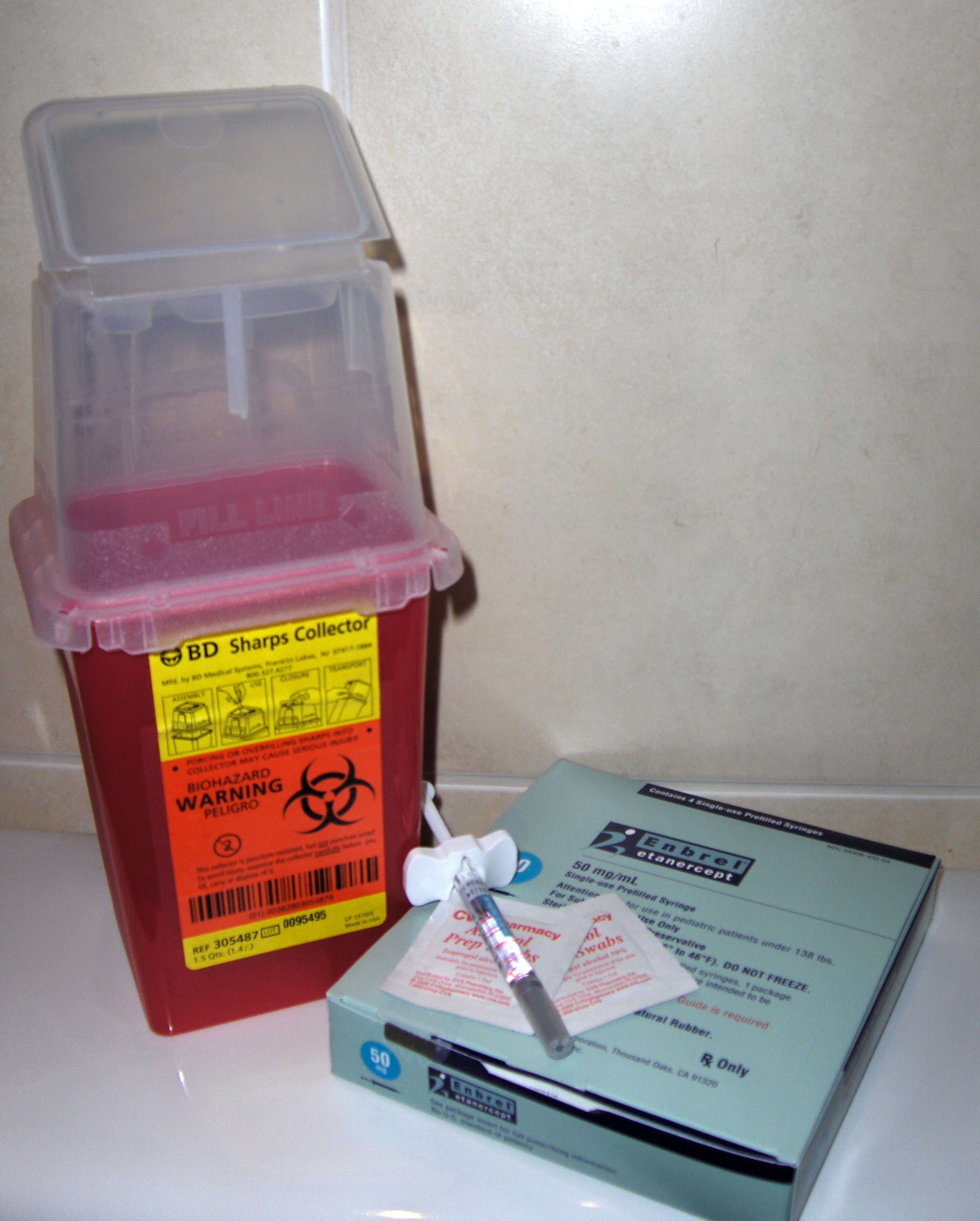
I was lucky. Prednisone (a steroid known to cause osteoporosis with long-term use) is GREAT stuff, and eliminated the pain and swelling in my joints within about 30 minutes of my return from the pharmacy. It continued to work its magic for several months while the long-term regimen of Ansaid (a nonsteroidal anti-inflammatory drug known to cause intestinal bleeding), Plaquenil (a disease modifying antirheumatic drug known to cause eye damage), and methotrexate (a chemotherapy agent known to cause liver damage) had time to build up in my system and suppress my immune system. Within six months, I looked and felt like a normal human being again, so I was happy to overlook any and all possible long-term side effects. Coming off the prednisone was a long, arduous process, but in about eighteen months I was finally able to do it. For the next twelve years, I continued on the Ansaid, Plaquenil, and methotrexate, and was doing so well that my rheumatologist believed I was in remission and encouraged me to begin weaning myself off all of those medications. I was drug-free for nearly a year before symptoms began to reappear, and I gradually added back all of the old medications, ramping up to and surpassing my previous dosages to try to control the flare. When it became obvious that the old drugs were no longer working, my rheumatologist started me on self-injected Enbrel, a TNF inhibitor that is one of the new biopharmaceuticals designed to treat autoimmune diseases. Again, I was lucky, and as soon as the Enbrel kicked in, I was able to eliminate all of the other medications once more. I’m now symptom-free as long as I continue my weekly (or biweekly if I’m feeling really good) injections. The trade-off is that treatment with Enbrel means I have an increased risk of developing a serious infection that could lead to hospitalization or death, and also a “several-fold” increase in the risk of developing lymphoma compared to the general population.
So, back to the question. I am interpreting it to mean that a single treatment would cure the arthritis—gone, completely and forever—with no side effects to worry about down the road, and that for the unfortunate 1 percent, death would come immediately after taking the medication. Therefore, I say absolutely, release it to the public. I’d be first in line to take it. For me, the one in a hundred chance of immediate (and I’m also assuming quick and painless here) death is a small worry compared to wondering every time I inject myself if this’ll be the dose that kicks off some horrible infection or lymphoma. A quick death as one of the 1 percent doesn’t sound as terrible as a long, agonizing, and ultimately unsuccessful battle against infection or cancer. And the other 99 percent, some of whom have likely not experienced the same success in eliminating their symptoms as I have, would have their lives back. They could once again take a walk, open a door, wrestle on the floor with their children or their pets, play the piano or the fiddle or the saxophone, twist off the cap of a cold beer, knit a sweater, assemble IKEA furniture, cut up their own steak, hold a toothbrush, run up the stairs, dig in the garden, button their jeans, turn on a lamp, tie their shoes…